The insurance industry is built around protecting individuals and businesses from financial risks. However, not every possible scenario can be listed in a policy. This is where insurance industry catchalls come into play. These provisions ensure that policies remain flexible enough to cover situations that may not be explicitly mentioned but still fall within the intended scope of coverage.
In this guide, we will explore what catchalls in the insurance industry mean, how they work, and why they are important for policyholders.
What Are Insurance Industry Catchalls?
Insurance industry catchalls refer to broad clauses or provisions within insurance policies designed to cover situations not specifically listed. Instead of naming every possible risk, insurers use catchall language to ensure that policies remain practical and comprehensive.
For example, a policy may include wording such as:
- “Any other related damages”
- “Similar risks not otherwise excluded”
- “Other unforeseen events within the scope of coverage”
These phrases function as catchall provisions, helping prevent gaps in protection.
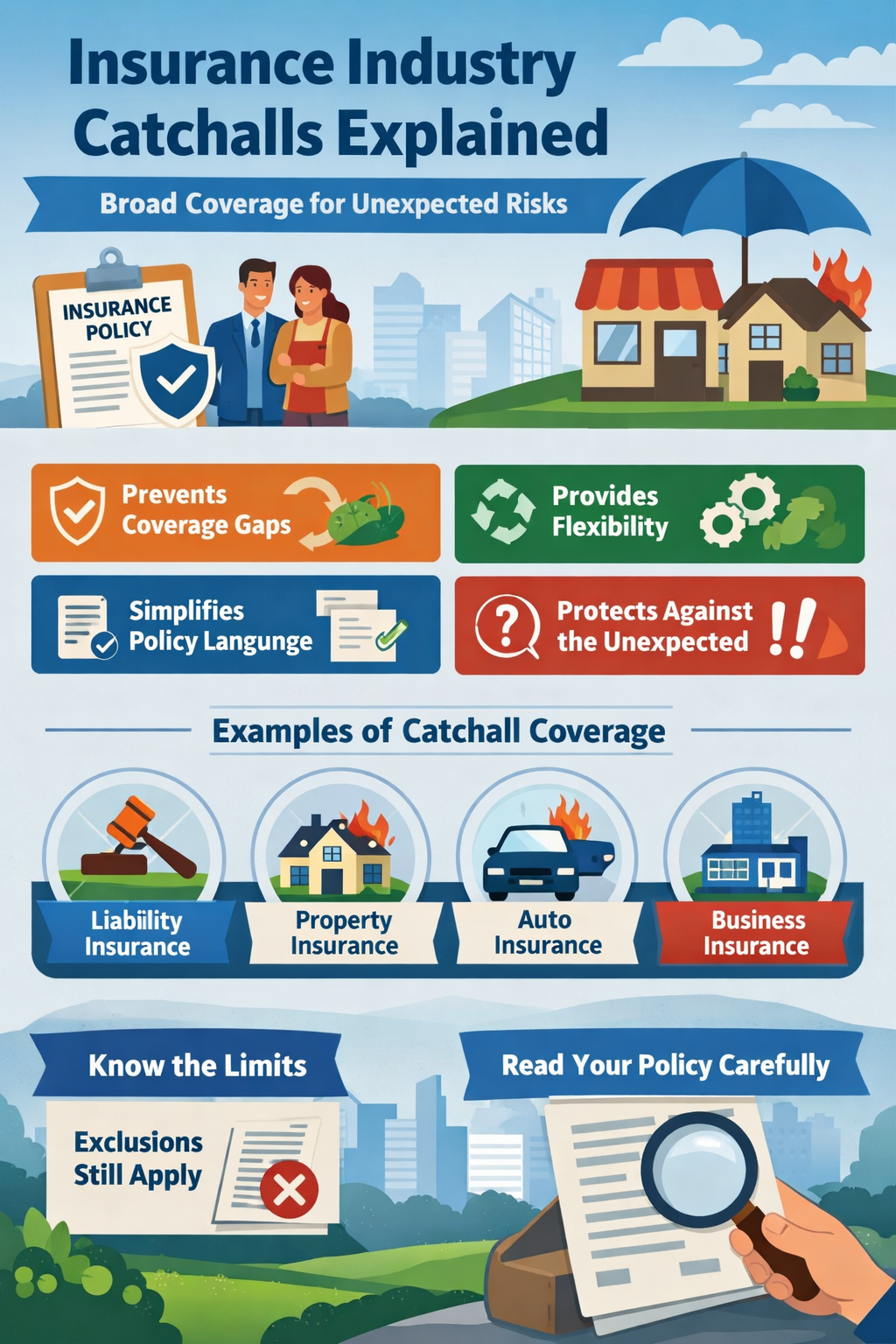
Why Catchall Clauses Are Important in Insurance
Catchall provisions play a crucial role in the insurance sector for several reasons.
1. Prevent Coverage Gaps
Without catchalls, policies would need to list every possible risk individually. Since this is nearly impossible, catchall clauses help close coverage gaps that might otherwise leave policyholders unprotected.
2. Provide Flexibility
The world constantly changes, and new risks emerge over time. Catchall clauses allow insurance policies to adapt to unforeseen circumstances without requiring constant updates.
3. Simplify Policy Language
Listing every scenario would make insurance contracts extremely long and complicated. Catchalls simplify policies by grouping similar risks together.
4. Improve Policyholder Protection
For policyholders, catchall language increases the likelihood that unexpected situations may still qualify for coverage.
Examples of Insurance Industry Catchalls
Catchall clauses appear in many types of insurance policies.
1. General Liability Insurance
Policies often cover “other related incidents arising from normal business operations.” This catchall helps ensure coverage for unusual accidents not specifically listed.
2. Property Insurance Industry Catchalls
A property insurance policy might include protection for “other sudden and accidental damage not excluded.”
3. Auto Insurance
Auto insurance sometimes uses catchall language to include similar incidents involving vehicle operation.
4. Business Insurance
Commercial policies may protect against “other operational risks associated with the insured business.”
How Catchall Clauses Affect Claims
When a claim is filed, insurers evaluate whether the event falls under the catchall clause. The process typically involves:
- Reviewing the policy wording
- Checking for explicit exclusions
- Determining whether the event is reasonably related to covered risks
If the incident fits within the intended coverage and is not excluded, the catchall clause may allow the claim to be approved.
Limitations of Insurance Catchalls
Although catchall clauses provide flexibility, they are not unlimited. Insurance companies still rely on exclusion clauses that clearly state what is not covered.
Common exclusions may include:
- Intentional damage
- Illegal activities
- Normal wear and tear
- Certain high-risk events
Because of these exclusions, it is important for policyholders to read their policies carefully.
Tips for Understanding Catchall Coverage
To make the most of catchall provisions in your insurance policy, consider the following tips:
1. Read the Entire Policy
Catchalls only work within the broader policy structure.
2. Look for Exclusions
Exclusion sections define the limits of catchall coverage.
3. Ask Your Insurance Provider
Clarifying how catchall clauses apply to your situation can prevent misunderstandings.
4. Review Coverage Regularly
As risks change, reviewing your policy ensures your protection remains adequate.
The Future of Catchall Clauses in the Insurance Industry
As new risks emerge—such as cyber threats and evolving business models—the role of insurance industry catchalls is becoming even more important. Insurers continue to refine policy language to balance flexibility with clarity, ensuring policies remain both protective and understandable.
For consumers and businesses alike, understanding catchall clauses can help you make better insurance decisions and avoid unexpected coverage gaps.
Conclusion
Insurance industry catchalls are essential components of modern insurance policies. They provide flexibility, reduce coverage gaps, and help policies remain relevant in a constantly changing risk environment. By understanding how catchall provisions work, policyholders can better evaluate their coverage and ensure they are protected against both common and unexpected events.