Car insurance companies usually categorize drivers based on their risk level. While most drivers qualify for standard policies, some fall into a higher-risk category and require non standard auto insurance. This type of coverage is designed specifically for drivers who may not qualify for traditional insurance policies.
In this guide, you’ll learn what auto insurance is, who needs it, how it works, and how to find affordable options even if you have a challenging driving history.
What Is Non Standard Auto Insurance?
Non standard auto insurance is a specialized type of car insurance created for drivers who are considered high risk by insurance companies. These drivers may have a history that makes insurers more cautious when providing coverage.
Unlike standard policies, auto insurance typically comes with higher premiums because the insurer assumes a greater financial risk.
Insurance companies often divide drivers into three categories:
- Preferred drivers – Those with clean driving records and excellent credit.
- Standard drivers – Average drivers with minor infractions.
- Non standard drivers – High-risk drivers who require specialized coverage.
If you fall into the third category, auto insurance can help you stay legally insured while improving your driving record over time.
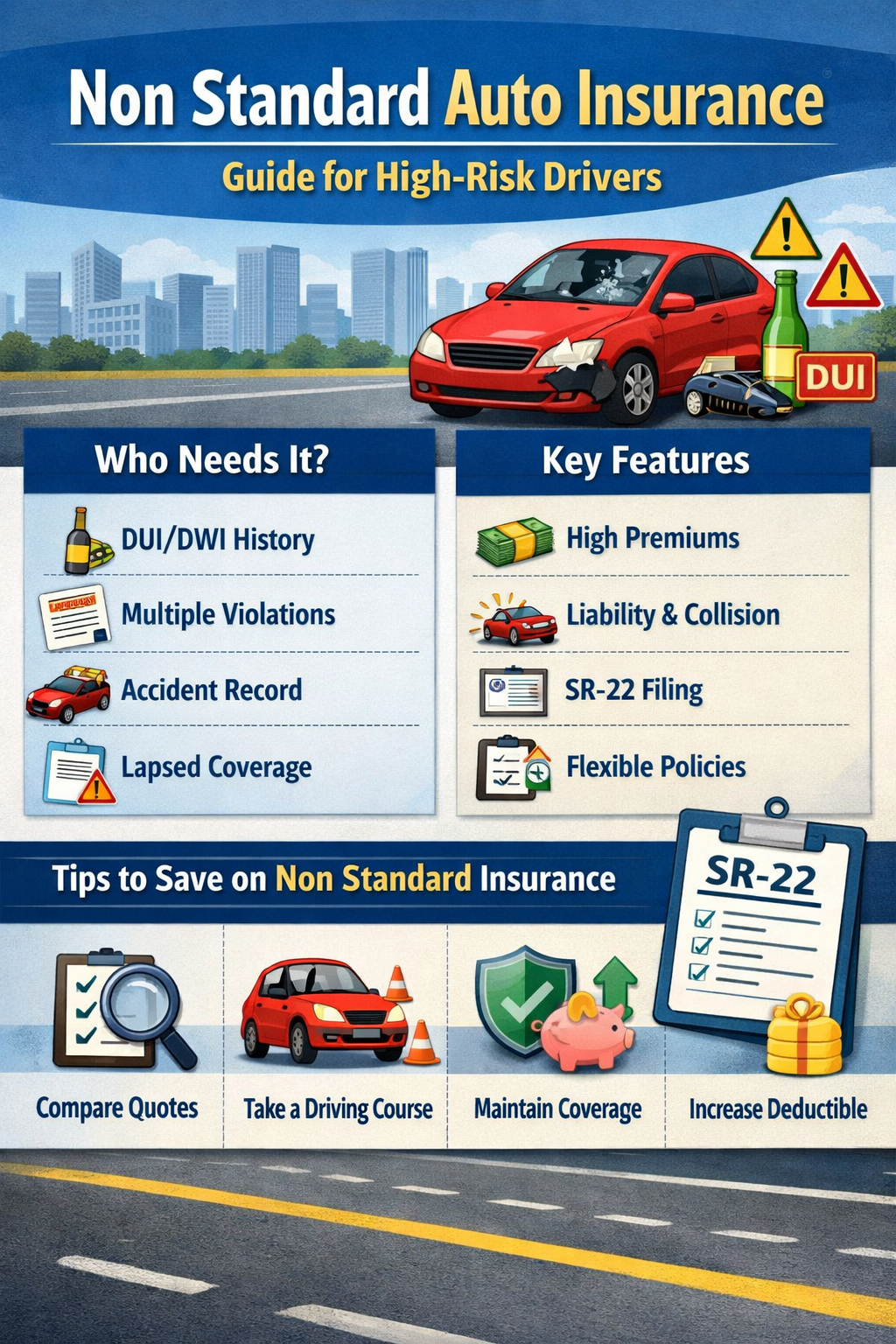
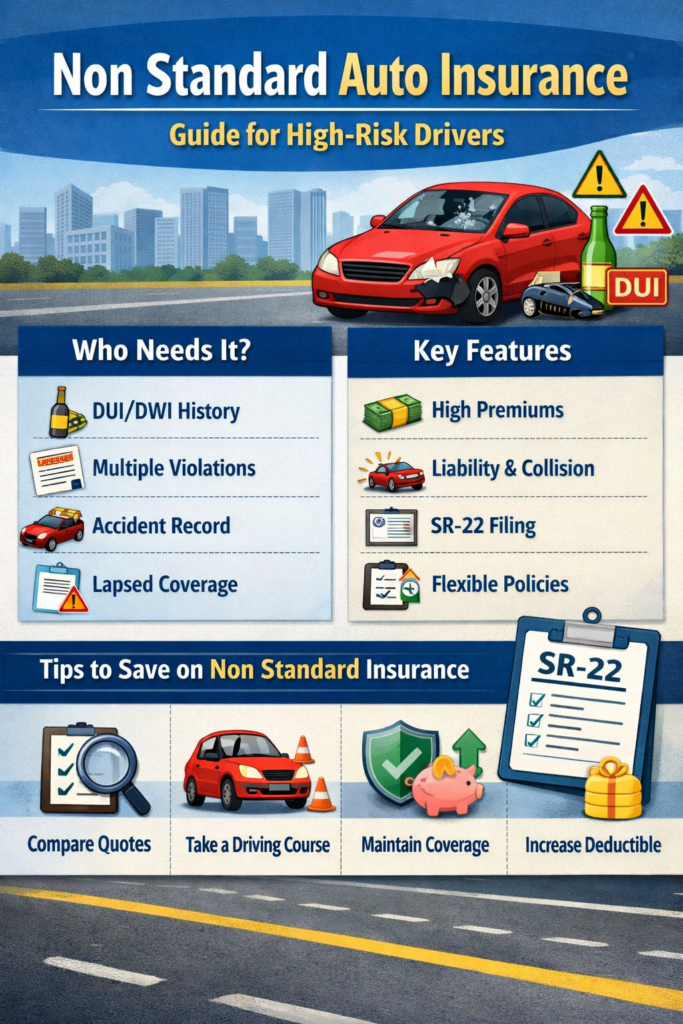
Who Needs Non Standard Auto Insurance?
Several factors can cause a driver to be classified as high risk. You may need auto insurance if any of the following situations apply:
1. Multiple Traffic Violations
Drivers with several speeding tickets, reckless driving charges, or other violations are often placed in the non-standard category.
2. DUI or DWI Offenses
A history of driving under the influence significantly increases insurance risk, making non standard policies more common.
3. At-Fault Accidents
If you have multiple accidents on your record, insurers may require non standard auto insurance.
4. Young or Inexperienced Drivers
Teen drivers and those with limited driving history are sometimes placed in the non-standard category.
5. Lapse in Insurance Coverage
If you’ve had gaps in your insurance history, insurers may consider you a higher-risk driver.
How Non Standard Auto Insurance Works
auto insurance works similarly to traditional car insurance, but it is tailored to high-risk drivers. Policies typically include:
- Liability coverage for damages or injuries you cause to others
- Collision coverage for damage to your vehicle after an accident
- Comprehensive coverage for non-collision incidents like theft or weather damage
- Uninsured/underinsured motorist protection
However, premiums are usually higher because insurers must account for the increased likelihood of claims.
How Much Does Non Standard Auto Insurance Cost?
The cost of non standard auto insurance varies widely depending on several factors, including:
- Driving history
- Age and experience
- Vehicle type
- Location
- Credit score (in some regions)
High-risk drivers can sometimes pay 30% to 100% more than standard policyholders. However, prices vary between insurers, so comparing quotes is essential.
Tips for Finding Affordable Non Standard Auto Insurance
Even if you are classified as a high-risk driver, there are ways to reduce your insurance costs.
Compare Multiple Insurance Quotes
Different companies assess risk differently, so shopping around can help you find better rates.
Take Defensive Driving Courses
Completing certified driving courses may qualify you for discounts.
Maintain Continuous Coverage
Avoiding lapses in insurance can improve your risk profile over time.
Choose a Higher Deductible
A higher deductible often lowers your monthly premium.
Improve Your Driving Record
Safe driving over time can help you transition from non standard to standard insurance.
Can You Move From Non Standard to Standard Insurance?
Yes. Many drivers eventually move back to standard coverage. Insurance companies periodically review your driving record, and if you maintain a clean history for several years, you may qualify for lower-risk policies.
Practicing safe driving, paying premiums on time, and avoiding new violations can significantly improve your eligibility for standard auto insurance.
Final Thoughts
Non standard auto insurance plays an important role in ensuring that high-risk drivers can still obtain legal car insurance coverage. While premiums may be higher, these policies provide essential protection and an opportunity to rebuild your driving record.
By comparing insurers, improving driving habits, and maintaining continuous coverage, drivers can gradually reduce their risk profile and potentially qualify for standard auto insurance in the future.